doxGen (documenter) by RedTech0
added a 'See Also' section via '---@see <destination> <label> <description>'

Dox Gen
this is a simple documentation generator
Usage
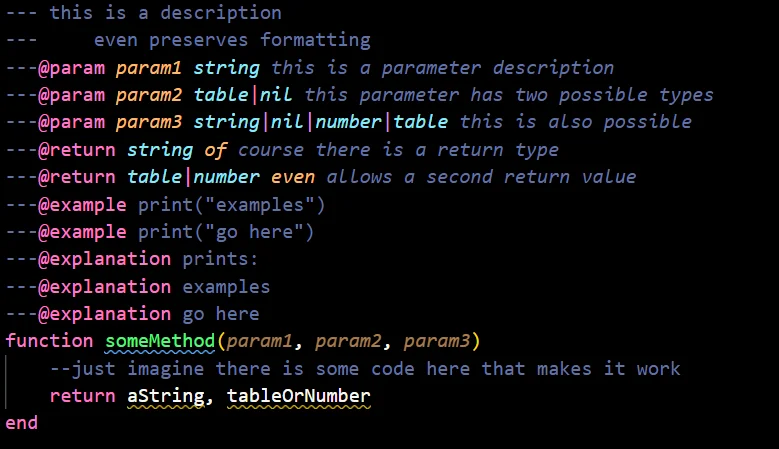
just put documentation above your code like:
example.lua:
--- this is a description
---     even preserves formatting
---@param param1 string this is a parameter description
---@param param2 table|nil this parameter has two possible types
---@param param3 string|nil|number|table this is also possible
---@return string of course there is a return type
---@return table|number even allows a second return value
---@example print("examples")
---@example print("go here")
---@explanation prints:
---@explanation examples
---@explanation go here
---@see example example this links back to this file
function someMethod(param1, param2, param3)
    --just imagine there is some code here that makes it work
    return aString, tableOrNumber
end
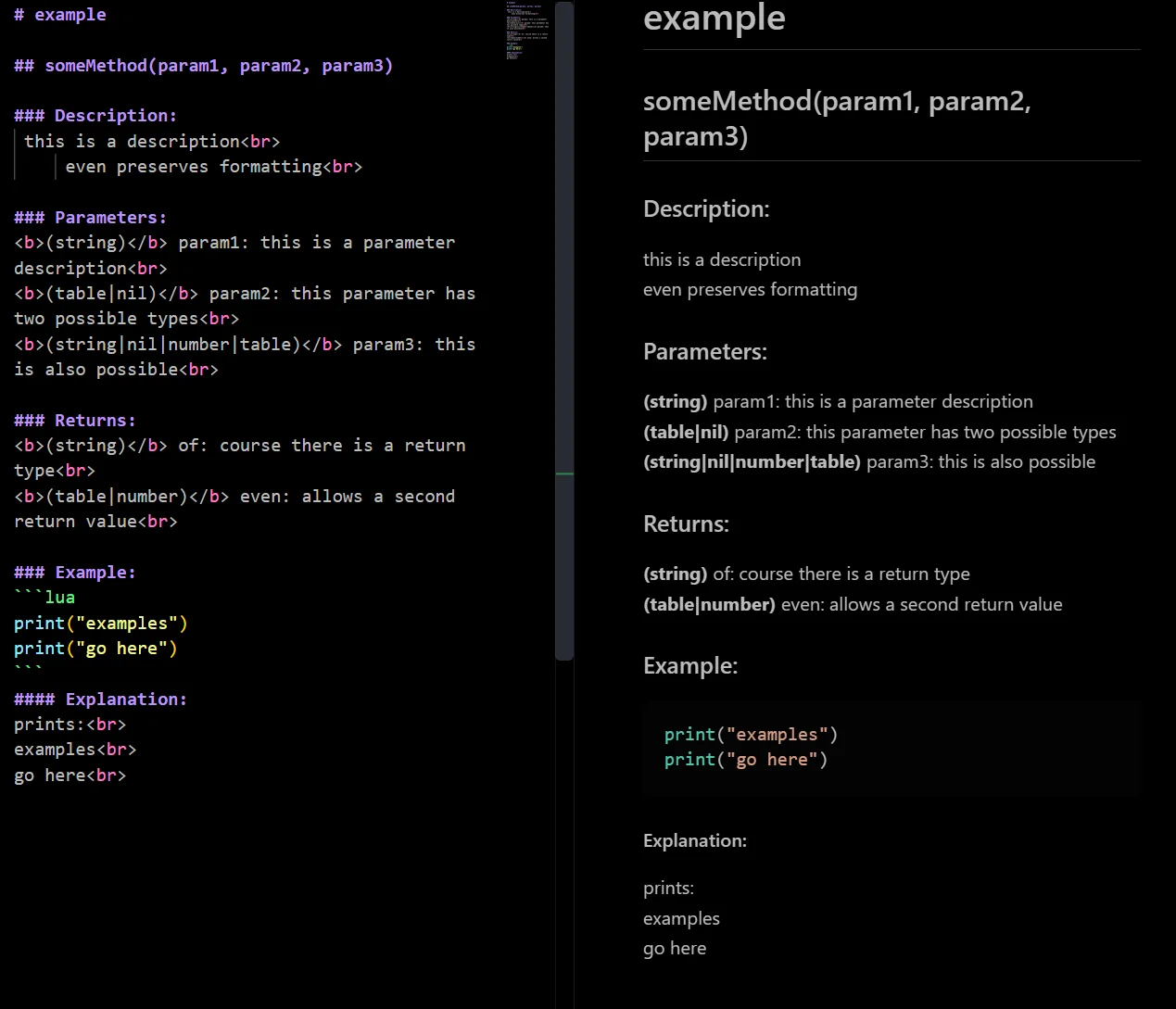
and get out:
example
someMethod(param1, param2, param3)
Description:
this is a description
even preserves formatting
Parameters:
(string) param1: this is a parameter description
(table|nil) param2: this parameter has two possible types
(string|nil|number|table) param3: this is also possible
Returns:
(string) of: course there is a return type
(table|number) even: allows a second return value
Example:
print("examples")
print("go here")
Explanation:
prints:
examples
go here
See Also:
example: this links back to this file
Annotations
List of them
@param
put
---@param <name> <type> <description>let's put it in practice
e.g:
---@param fileName string this is the file this functions scansor
---@param tags table|nil a table of tags you would like to add can also be nil@return
put
---@return <tape> <name> <description>again in practice
e.g:
---@return number temp this is the temperature calculatedand they can also have multiple types and even multiple variables that are returned by stacking:
---@return number temp this is the temperature calculated
---@return string|nil state this is the state of the matirale at that temp
@example
this is used by writing direct lua
---@example <lua line>e.g:
--@example --use methods like this
--@example local value = myFunc(io.read())
@explanation
this is kind of a sup chapter of example cause it only works with it
---@explanation <some text explaining the code chunk above>e.g
---@explanation in the example we get a value from the user and process it in myFuncRest of Docs
file too big so check out my github for more
important
local functions will not be documented as they are lua's private methods
also definitions via don't work
vairable = function() endwhat does work is
local table = {}

function table.method()
end
wget run https://pinestore.cc/d/282
Git Repository